
This article will explain how to use the LAUNCH CRT5011 V2 to detect faulty tire pressure sensors on a 2017 Buick Envision and replace them with new ones.
Fault Description: 2017 BUICK Envision shows a TPMS fault on the instrument panel.
Tested Model: 2017 Buick Envision
Supported Device: LAUNCH Creader TPMS 5011 V2 (CRT5011 V2)
Operating procedures:
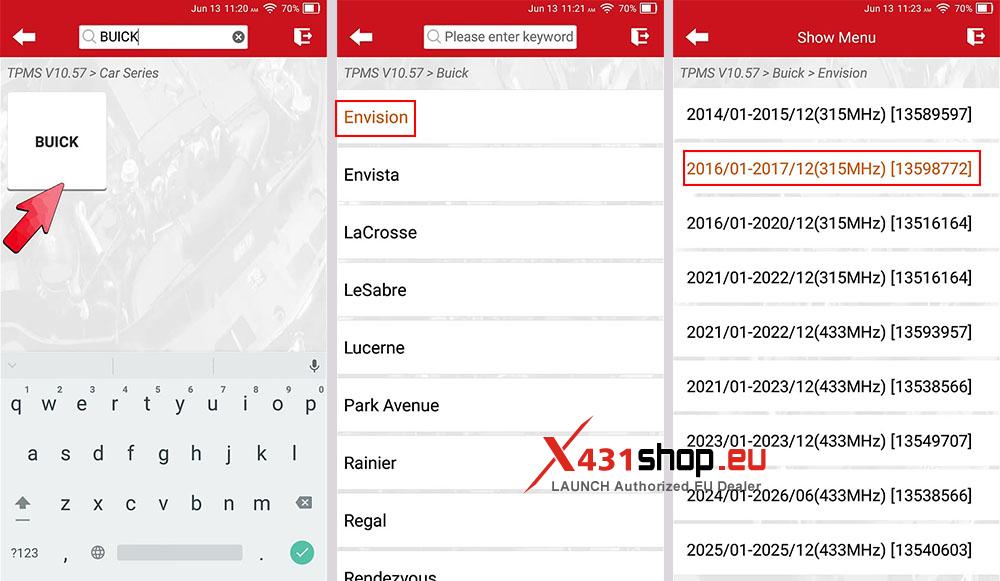
1) On LAUNCH CRT5011 V2, click [TPMS] -> [BUICK] -> [Envision]. Choose the menu for the model year 2017.
Note: If multiple menus exist for the same model year, try another one iff.
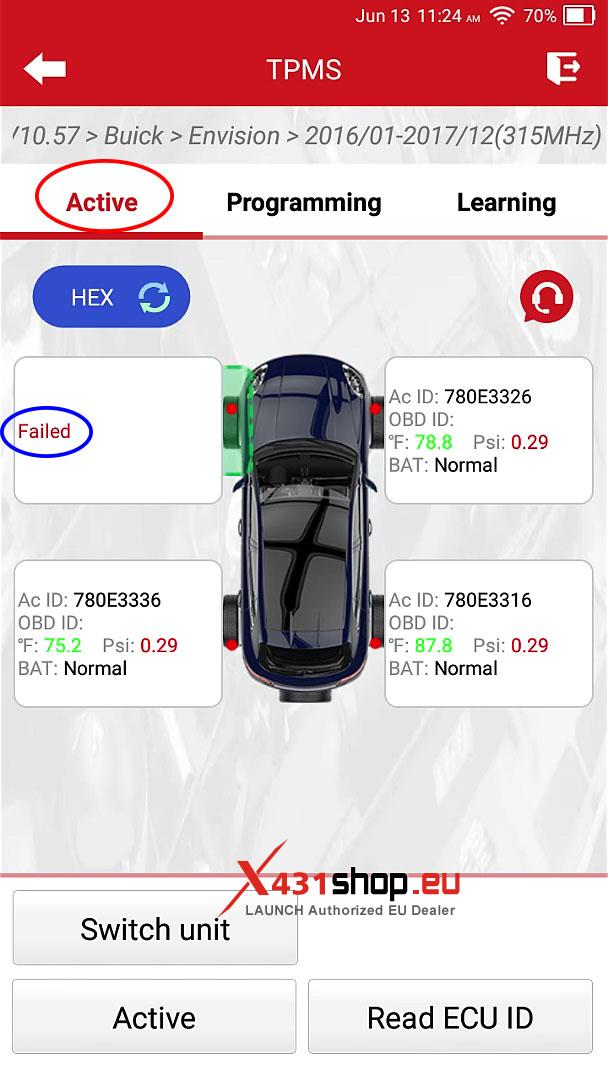
2) Choose [Active] to activate the four tire pressure sensors.
The FR, RR, and RL wheel sensors are successfully activated, but the FL wheel sensor fails to be activated, so it is confirmed that the FL wheel sensor is damaged.
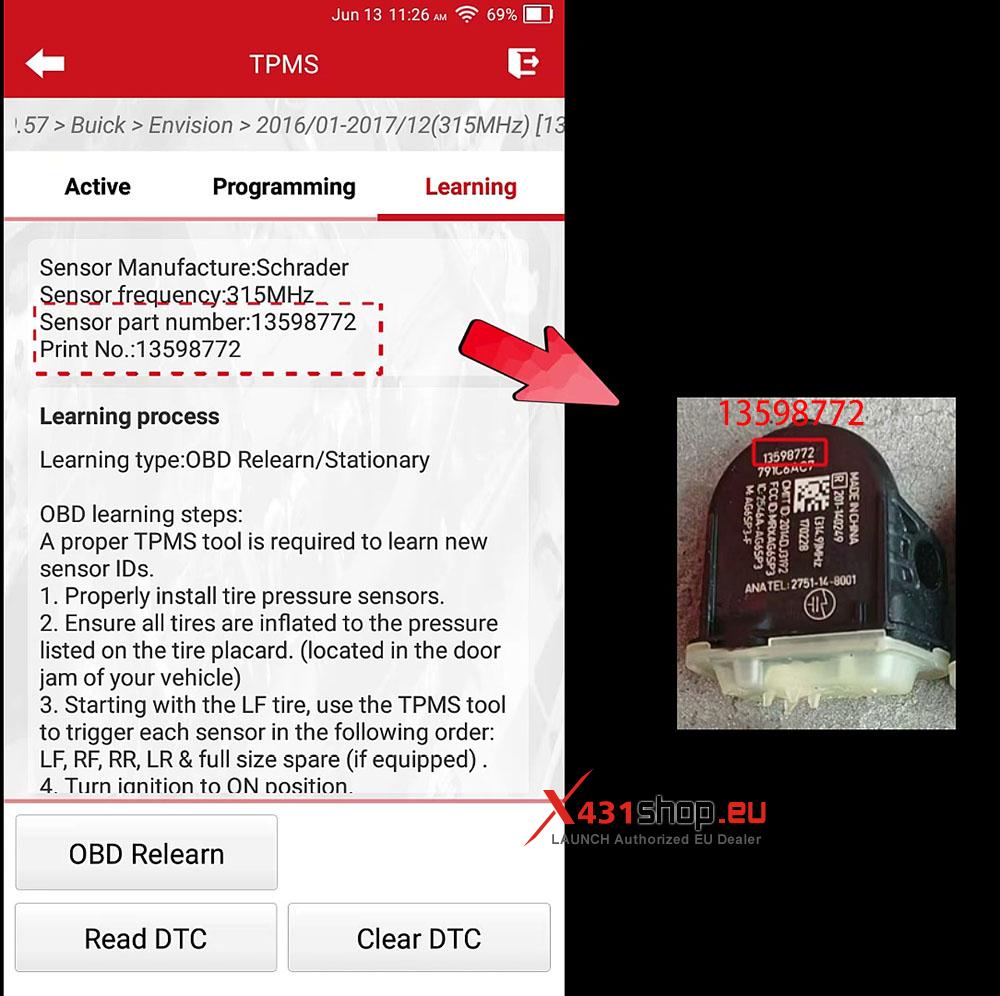
3) Remove the failed sensor, choose [Learning].
Check the sensor part number or print number under theselected menu. Proceed only if one of them matches.
Note: If it is an original sensor, verify, if it has been replaced with a different brand sensor, proceed to next step.
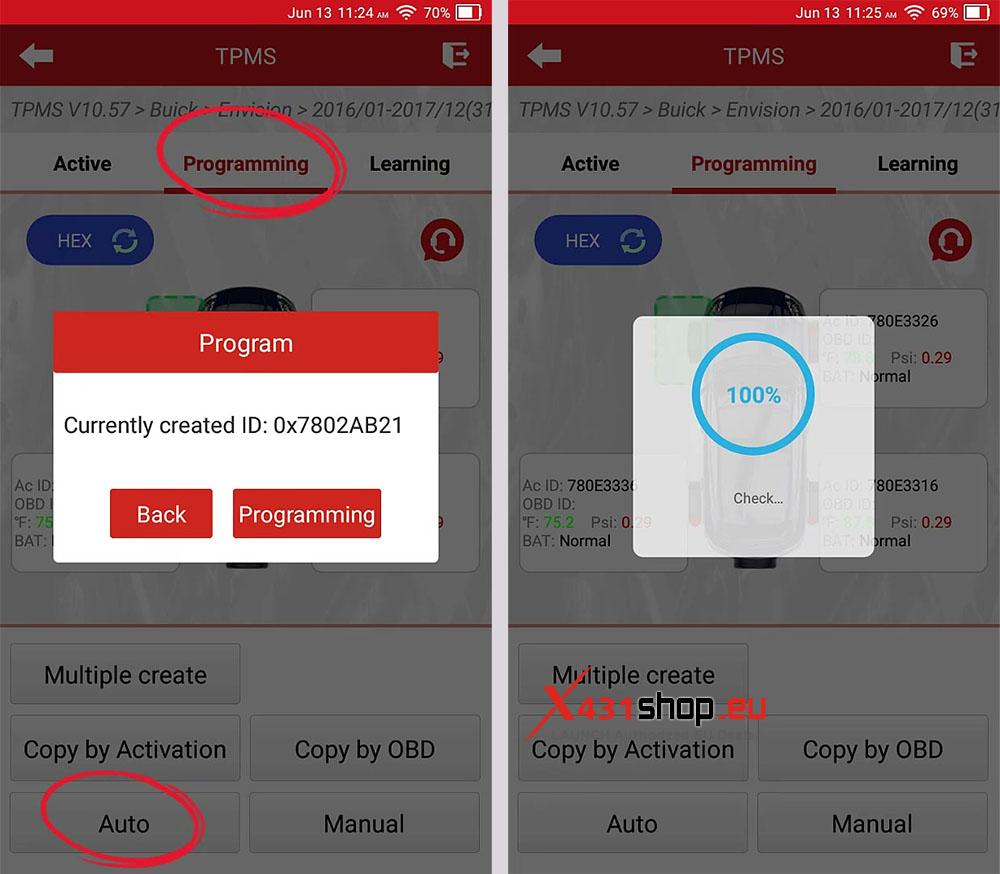
4) Click [Programming] and choose [Auto]. The programming result is shown shortly. Wait for the programming to complete.
Note: You can also choose [Manual] to input the originalvehicle sensor ID or [Copy by OBD] to copy the sensor ID. For sensors programmed using this method, if the instrument panel does not display tire pressure values, the Buick learning method is still required for learning process.
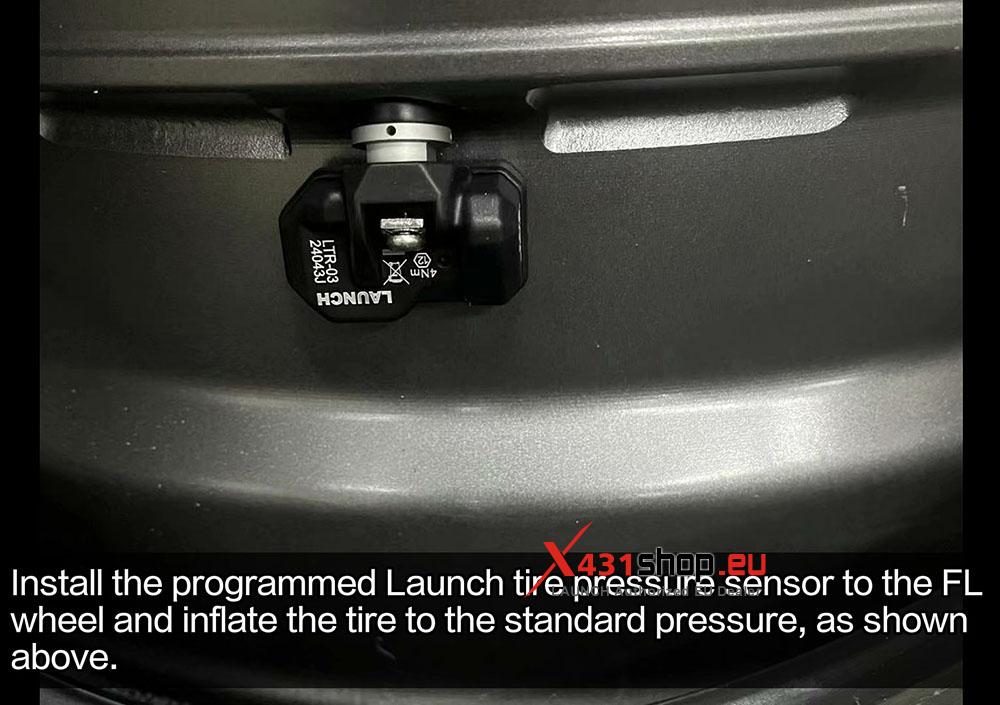
5) Install the programmed Launch tire pressure sensor to the FL wheel and inflate the tire to the standard pressure, as shown above.
6) Choose [Active] to activate the LAUNCH tire pressure sensor at the FL wheel position. Click [Learning]. Click [OBD Relearn], Proceed with the operation after successful learning. Sensor learning successful.
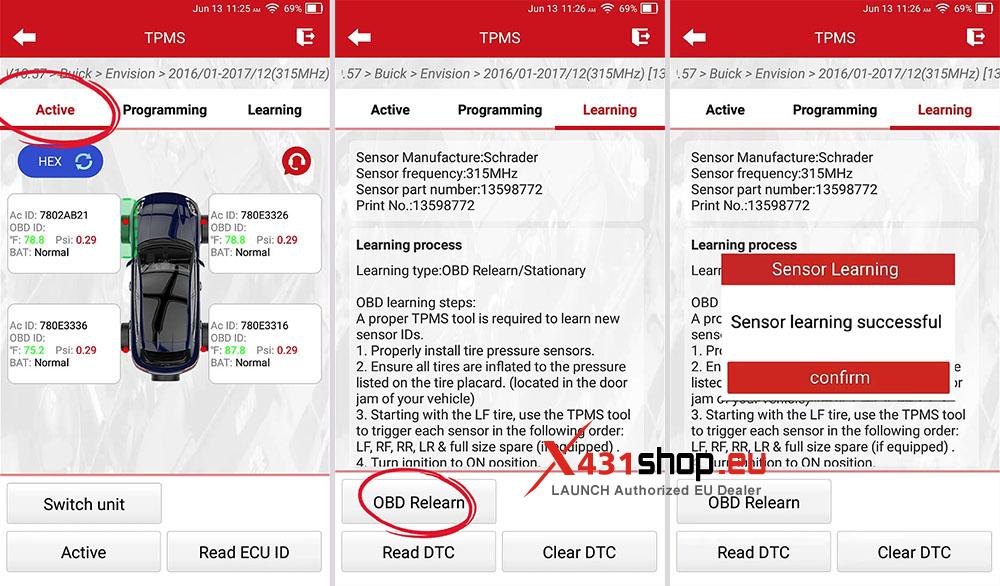
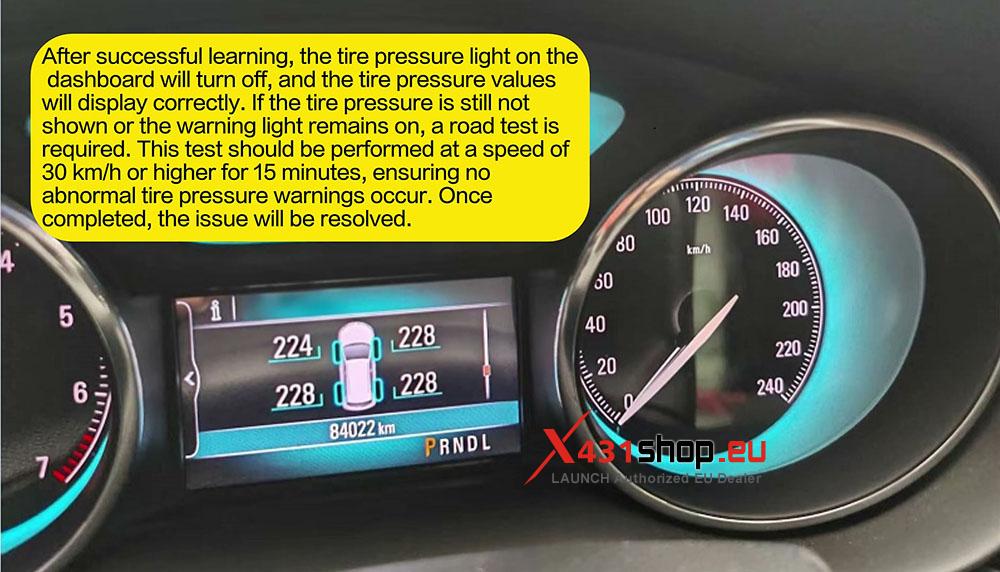
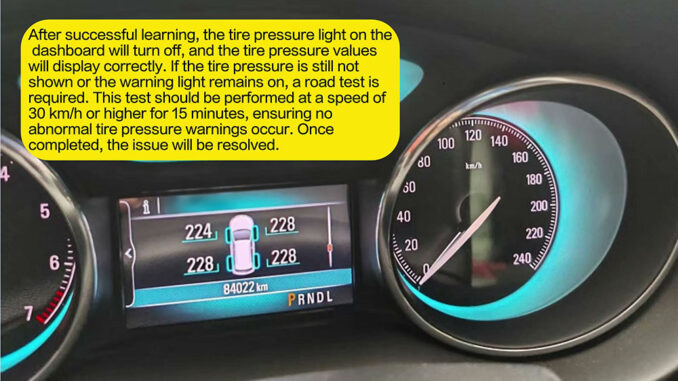
After successful learning, the tire pressure light on the dashboard will turn off, and the tire pressure values will display correctly.
If the tire pressure is still not shown or the warning light remains on, a road test is required. This test should be performed at a speed of 30 km/h or higher for 15 minutes, ensuring no abnormal tire pressure warnings occur. Once completed, the issue will be resolved.